
APL’s strategic collaborations with other Johns Hopkins University (JHU) divisions strengthen the Lab’s ability to tackle the nation’s most complex technical challenges. Working alongside university researchers, faculty, and students, APL experts transform foundational research into real-world solutions while providing technical and strategic guidance at the intersection of academia, industry, and government. These partnerships leverage the expertise of a world-class research institution to accelerate innovation, educate the current and future workforce, and develop impactful technologies that address national priorities.
Partnerships With a Purpose
APL collaborates with more than a dozen JHU centers, including the newly formed Data Science & AI Institute, the Hopkins Extreme Materials Institute, and the Information Security Institute, on numerous projects spanning low Earth orbit communications, materials discovery driven by artificial intelligence (AI), extreme-temperature materials that can withstand hypersonic speeds, optical circuit components, brain-computer interfaces, and agentic AI robotics for field casualty care. A flagship example of this partnership is the SURPASS program, where interdisciplinary teams of APL and Whiting School of Engineering (WSE) researchers use innovative, multidisciplinary approaches to address some of the world’s most pressing challenges.
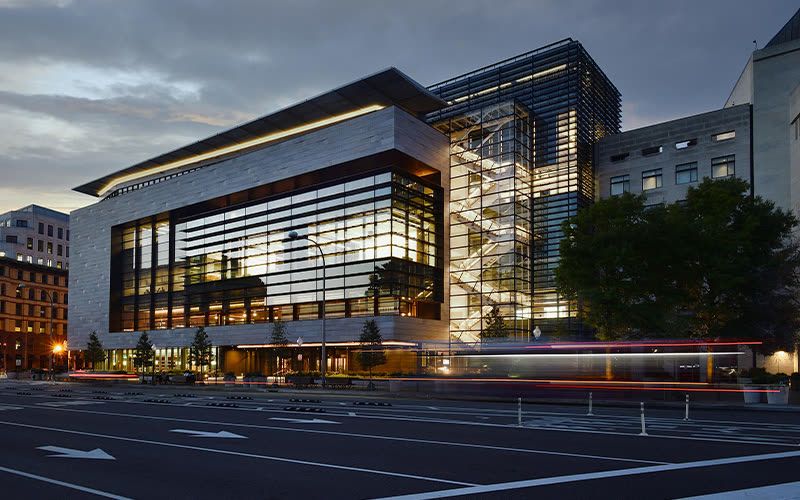
The Johns Hopkins Bloomberg Center in Washington, D.C., serves as a hub for collaboration among APL researchers, university faculty, policymakers, and industry leaders, advancing dialogue at the intersection of science, technology, and national priorities.
The Laboratory also works closely with Johns Hopkins faculty to shape degree programs, certificates, and coursework that support national security goals, often providing secure labs and classified training. For example, APL partners with the Johns Hopkins University School of Advanced International Studies (SAIS) on a graduate-level national security education initiative with the U.S. Space Force that prepares military, interagency, and international professionals for leadership roles in the space domain. Through this collaboration, APL complements SAIS’s academic leadership by providing mission-relevant, classified research opportunities in national security space, technology, and strategy, along with access to specialized facilities and applied research environments aligned with real-world operational needs.
In 2025, this partnership expanded with the launch of the Applied Space Strategy Forum, bringing participants to APL multiple times throughout the year for deep dives into cutting-edge, and often classified, technical topics and facilities. The collaboration also enabled direct engagement with APL research teams, including hands-on participation by a program participant embedded with an APL space systems team, and featured SAIS faculty contributions at the Cislunar Security Conference, underscoring the strength of the integrated academic–technical exchange.
Thought Leadership in the Nation’s Capital
In 2025, APL researchers deepened thought leadership with federal and academic partners through a series of workshops and exchanges hosted at the Hopkins Bloomberg Center in Washington, D.C. They joined a workshop on human-machine teaming in space, contributing expertise in autonomous systems and strategy to discussions on the role of synergistic human-robot systems in sustained lunar and deep-space exploration. APL experts also engaged in a technical exchange with faculty from Johns Hopkins’ SAIS, offering perspectives on AI’s impact on the economy, defense, and national security and advancing a broader dialogue spanning policy, technology, and real-world implementation challenges.
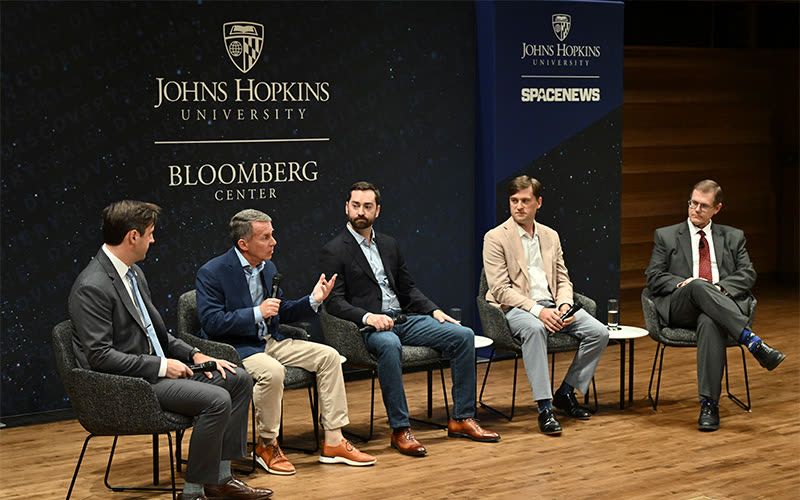
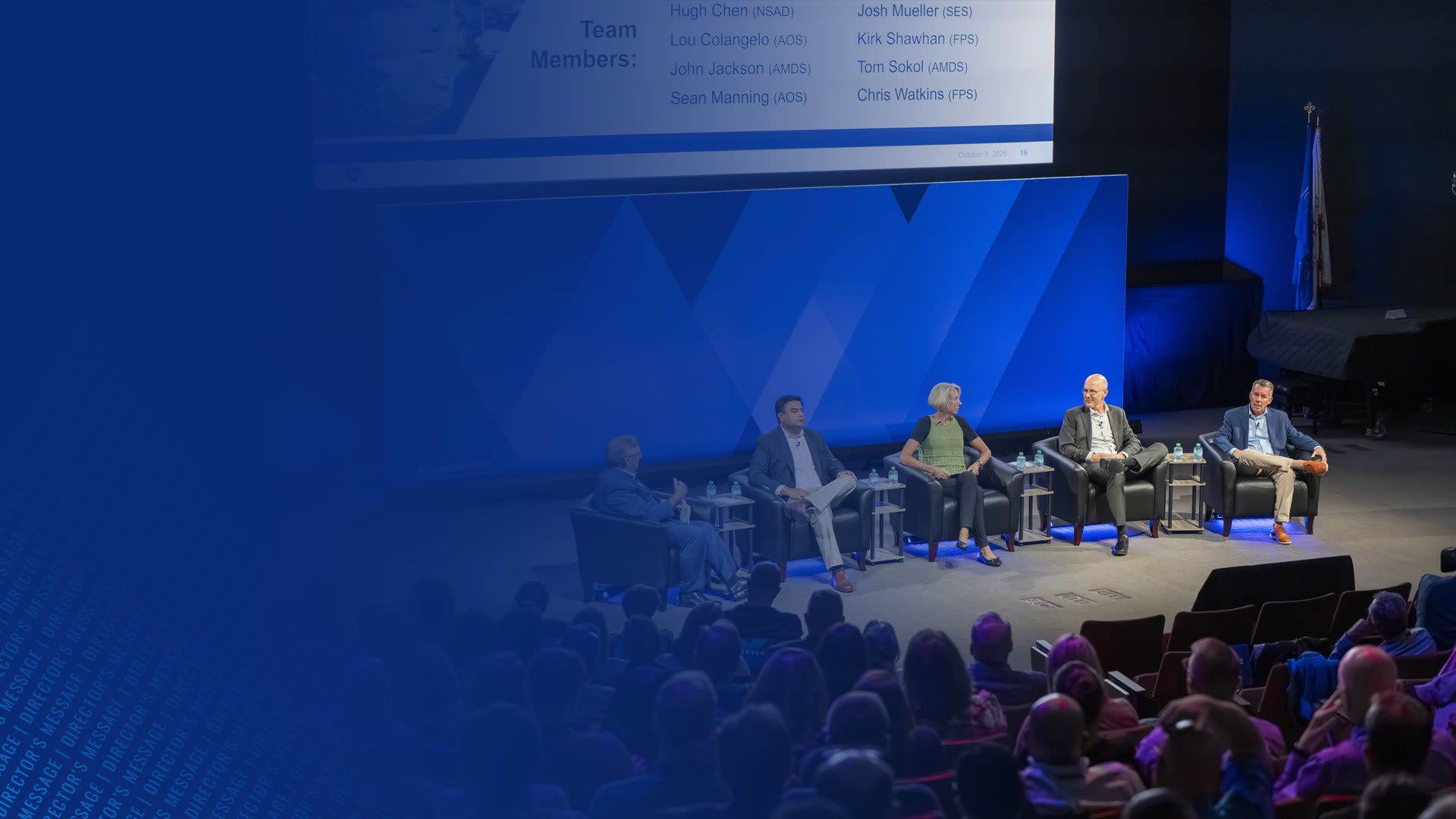
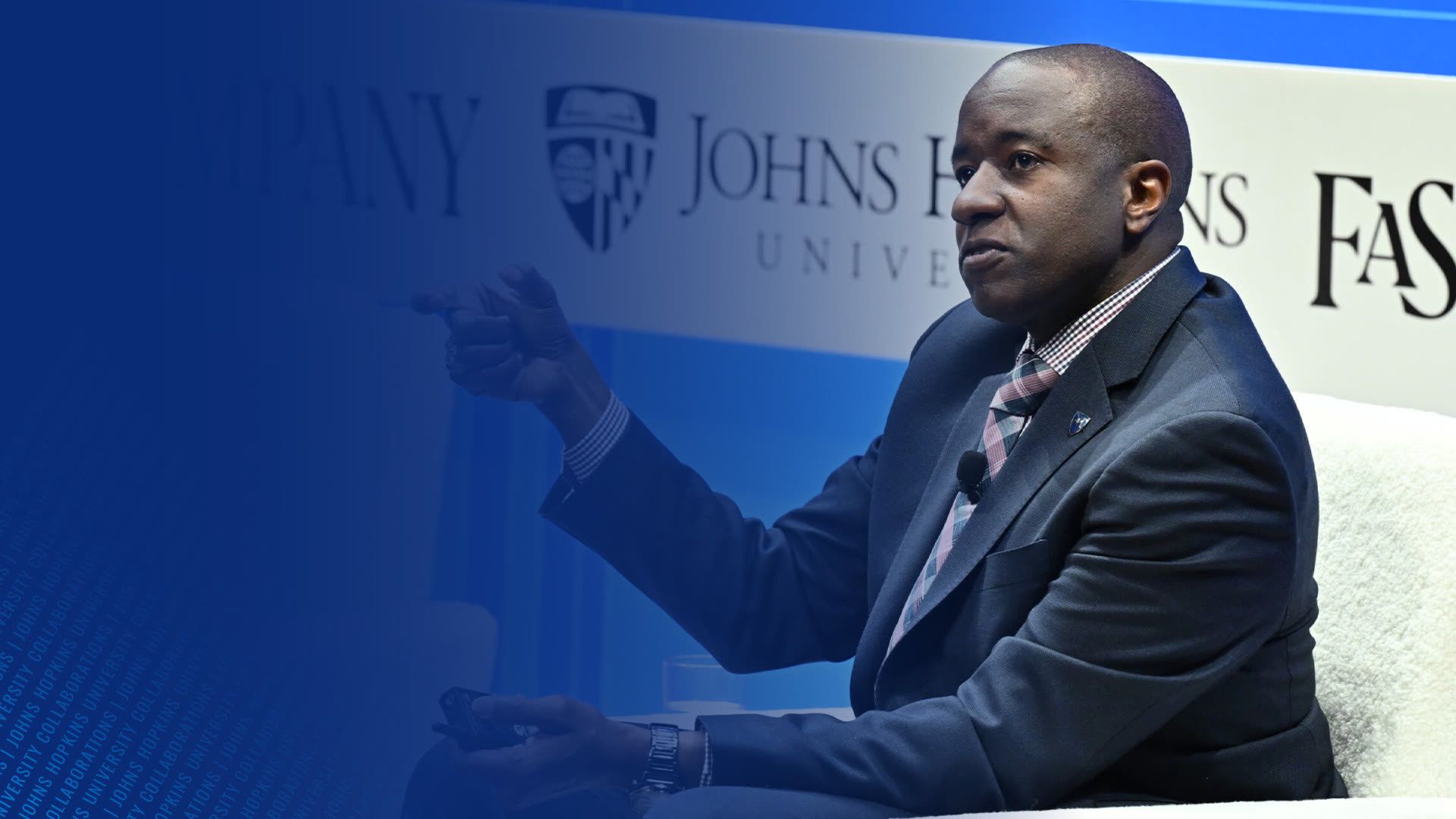
APL experts join academic and industry leaders at the Hopkins Bloomberg Center for a panel discussion on emerging technologies shaping the space economy to contribute perspectives on innovation, policy, and the future of space exploration.
Additionally, APL experts participated in high-profile programming at the Bloomberg Center that infused science, policy, and innovation into the national dialogue. In November, Space Exploration Sector Head Robert D. Braun joined industry leaders on a panel examining cutting-edge technologies shaping the space economy. APL’s contributions to interdisciplinary innovation were further highlighted at the inaugural Fast Company World Changing Ideas Summit, where breakthroughs in areas including brain-computer interfaces, planetary defense, and national security space reinforced APL’s role in translating research into transformative impact. Lending deep expertise in the cislunar domain, National Security Space Mission Area Executive Dennis Woodfork contributed to the Space Force Association’s Spacepower Series: Cislunar Space, sharing applied technical perspectives on emerging space capabilities and operational challenges with senior space professionals and stakeholders on Capitol Hill.
Discovery Awards
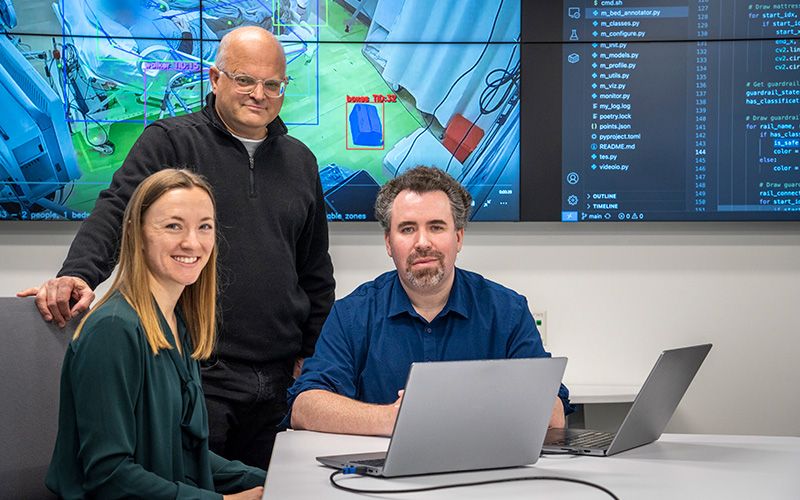
(From left) Danielle Howe, Alan Ravitz, and Lee Stearns received a 2025 Johns Hopkins Discovery Award for Smart Room Monitoring: AI-Powered 3D Simulation for Multi-Factor Fall Hazard Detection in Health Care Settings, a cross-disciplinary effort that applies artificial intelligence to improve safety in clinical environments.
Over the past decade, the Johns Hopkins Discovery Awards have funded high‑impact, cross‑disciplinary research efforts between JHU collaborators. In 2025, 38 teams, consisting of 142 researchers from 12 JHU entities, received up to $175,000 each to tackle complex challenges ranging from health care to fundamental physics. Among them were four projects led by APL researchers that focused on developing safer, stronger batteries; creating a multimodal sensing system that uses AI to detect fall, injury, or infection hazards; crafting localized pain-management sutures to curb opioid use; and refining digital cameras to detect dark matter.
Engineering for Professionals
APL collaborates with WSE to lead graduate programs through the Johns Hopkins Engineering for Professionals (EP) program. APL continues to play a critical role in the development of programs for EP, which originated as an in-house program for the advanced training of APL employees.
This year, several APL staff members were selected to chair or cochair Johns Hopkins EP graduate programs. Jason Kalirai, APL’s mission area executive for Space Formulation, was named chair of the Applied Physics program, while Zerotti Woods, an expert in intelligence, surveillance, and reconnaissance systems, was appointed cochair of the Data Science program alongside Ben Rodriguez, an experienced data science researcher. Kristin Fretz, managing executive of APL’s Space Exploration Sector, was appointed chair of the Space Systems Engineering program, and Stephanie Caporaletti, a leader in autonomous health technology research, was selected to chair the nationally top-ranked online Engineering Management program. Additionally, APL’s Tom Van Doren, Hugh Cameron, Karl Holub, Tim Simpson, and Millie Wears were recognized with EP Faculty Awards for their expertise, leadership, and sustained contributions to the program in 2025.
These leadership appointments and recognitions build on APL’s long-standing role in developing and teaching EP programs. The faculty comprises scientists and engineers from APL and WSE; from regional aerospace, engineering, and information technology companies; and from government agencies. Fourteen of EP’s 23 programs are based at APL and chaired by APL staff members.
RISE@APL
The RISE@APL program is a prestigious and highly competitive initiative that prepares JHU students majoring in engineering, computer science, applied mathematics, and physics for advanced technical careers. Open to undergraduate and graduate students from WSE and the Krieger School of Arts and Sciences, RISE@APL places participants alongside APL staff members on mission-driven projects spanning multiple Laboratory mission areas. Since its launch in 2014, RISE@APL interns have made meaningful contributions to efforts ranging from ballistic missile systems and computer vision to prosthetics and secure mobile communications.
Fresh Thinking, New Connections: Inside the Lab’s Sabbatical Program
APL’s Sabbatical Research Program allows staff members to step back into academic life, pairing their deep technical expertise and security focus with university collaborators’ academic acumen to fuel ideas and expand the impact of both institutions.
After informal discussions with cardiothoracic surgeons at Johns Hopkins School of Medicine, APL computational physicist Paul Burke applied his multiphase‑fluid‑dynamics expertise to model pediatric aortic blood flow, a problem far outside his usual defense work. Providing time and funding, the sabbatical allowed Burke to lead the effort, produce the team’s first peer‑reviewed paper, and attract additional external interest. Burke’s experience shows how APL staff can leverage university partnerships to tackle novel challenges, broaden their scientific horizons, and generate breakthroughs that benefit multiple application spaces.
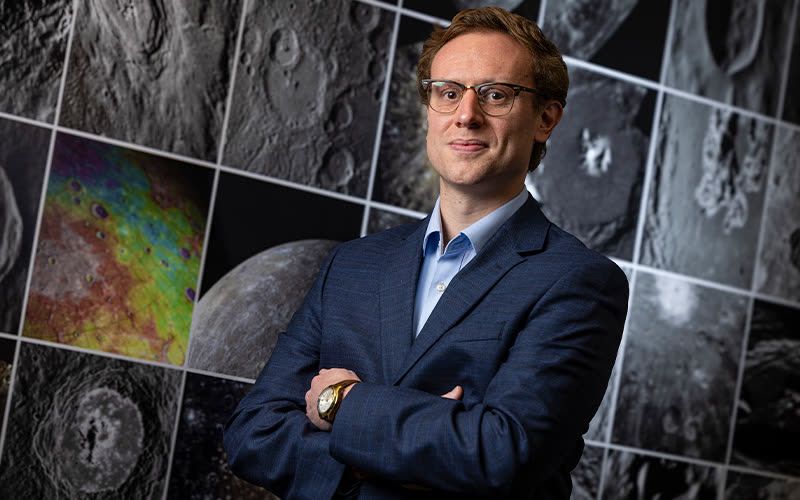
APL computational physicist Paul Burke leveraged a sabbatical collaboration with Johns Hopkins School of Medicine to apply multiphase-fluid-dynamics modeling to pediatric aortic blood flow, expanding his research beyond traditional defense applications and contributing to advances in biomedical science.