



Director’s
Message

Defending
the Nation

From the seas to the skies, cyberspace, and deep space, the challenges facing U.S. forces today span every domain. Whether enabling rapid planning for fleet protection, strengthening air and missile defenses, or advancing electronic warfare capabilities, APL applies deep technical expertise to design, integrate, prototype, and accelerate capabilities that help the nation anticipate threats and act decisively — making critical contributions toward a more agile, resilient, and integrated national defense posture.

Countering
Evolving
Threats

Innovation and technology are reshaping the nature of competition and conflict, blurring the boundaries between physical, digital, and biological threats. APL fuels the nation’s ability to stay ahead of these shifts by identifying vulnerabilities and developing solutions that strengthen security, defense, and resilience. From hypersonics and autonomy to biotechnology and infrastructure protection, the Laboratory is integrating science, engineering, and analysis to anticipate and counter tomorrow’s threats today.

Accelerating
Progress

Through
Partnerships

Today’s national security challenges demand rapid innovation, a call APL is answering by actively engaging commercial partners from across industries to identify and leverage their capabilities, manufacturing capacity, and cutting-edge research — while remaining an independent, trusted partner to the government. By combining its deep technical expertise and mission understanding with industry’s ability to rapidly scale emerging capabilities, APL helps bridge the gap between early-stage research and accelerating operationally relevant solutions.

Bold
Innovation

APL is redefining how artificial intelligence (AI), materials, manufacturing, and biology accelerate innovation for national defense and beyond. Through forward-leaning research, Laboratory researchers are exploring bold new concepts that may not reach the field immediately but are critical in shaping what comes next. By laying the groundwork for more resilient systems, faster innovation cycles, and transformative capabilities, APL is advancing the most innovative and effective technologies into real-world application and strengthening the nation’s technological advantage.

Exploring
The Extremes

APL’s mission to solve complex challenges drives discoveries across extreme frontiers — from the blazing atmosphere of the Sun to the deepest Arctic oceans and the icy moons of the outer solar system. APL spacecraft, sensors, and scientific instruments are revealing how solar physics and space weather impact our world, while parallel efforts on Earth are shaping technologies to sustain human and robotic exploration and operations in extreme environments.

A Culture
of Innovation

From incubating bold research proposals and developing the next generation of leaders to building collaborative workspaces, APL fuels creativity and novel ideas at every level.

Tech
Transfer

With a large portfolio of cutting-edge intellectual property and a team of experienced licensing staff, APL’s Tech Transfer offers streamlined access to technological innovations made at the Laboratory.

University
Collaborations

APL’s strategic collaborations with other Johns Hopkins University (JHU) divisions strengthen the Lab’s ability to tackle the nation’s most complex technical challenges. Working alongside university researchers, faculty, and students, APL experts transform foundational research into real-world solutions while providing technical and strategic guidance at the intersection of academia, industry, and government. These partnerships leverage the expertise of a world-class research institution to accelerate innovation, educate the current and future workforce, and develop impactful technologies that address national priorities.

Bold
Innovation

APL’s GenWar Lab leverages advanced AI and large language model capabilities to support the wargames and tabletop exercises that enable military decision-makers to explore dynamic and wide-ranging mission scenarios.

Applying AI to Strategic Analysis and Mission Planning

AI is reshaping how the nation approaches analysis, planning, and decision-making. In this domain, generative AI, in particular, opens up new possibilities for modeling complex scenarios and exploring strategies at a pace and scale once decidedly out of reach. This is especially true in wargames and related simulation exercises that national security and military decision-makers use to explore dynamic and wide-ranging mission situations.

In 2025, APL fused its deep analytic and AI capabilities to launch GenWar Lab, an incubator that taps advanced AI and large language model capabilities to support wargames and tabletop exercises.

Portrait of  James N. Miller Jr.

GenWar Lab reflects APL’s commitment to combine tools, infrastructure, and talent to leverage AI to find innovative solutions to the nation’s toughest security challenges.

 James N. Miller Jr., APL’s Assistant Director for Policy and Analysis

“This initiative radically accelerates APL’s ability to harness the power of AI and advanced analytics to augment traditional wargaming methods,” said James N. Miller Jr., APL’s assistant director for policy and analysis. “GenWar Lab reflects APL’s commitment to combine tools, infrastructure, and talent to leverage AI to find innovative solutions to the nation’s toughest security challenges.”

Three distinct capabilities have already emerged out of GenWar Lab: GenWar TTX, GenWar Sim, and GenWar X.

GenWar TTX:
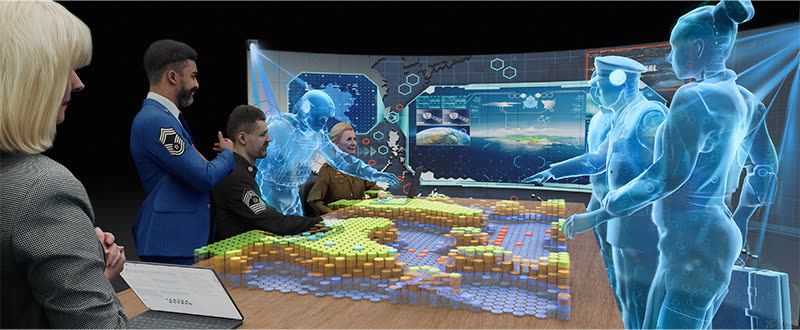
Brings AI Into the Game — GenWar TTX is a digital environment where senior military commanders and civilian leaders can engage in tabletop exercises that are enabled by a diverse set of AI agents serving as both advisers and adversaries. The TTX platform accelerates and expands wargaming capabilities to enable innovative intelligence analysis and the exploration of AI agent behavior in complex scenarios.

GenWar Sim:
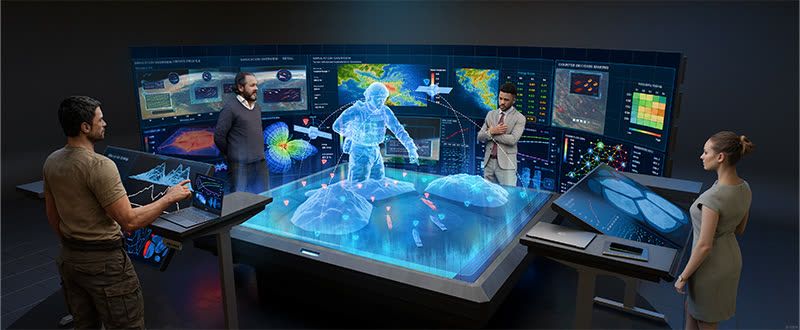
Accelerated Modeling and Simulation Wargaming — GenWar Sim bridges the gap between wargaming and physics-based modeling and simulation, combining human judgment with machine speed. Built on the Advanced Framework for Simulation, Integration, and Modeling (AFSIM), GenWar Sim brings greater rigor and repeatability to every game and analytical excursion by connecting with modeling and simulation to give decision-makers direct access to engineering-driven insights provided by APL.

GenWar X:
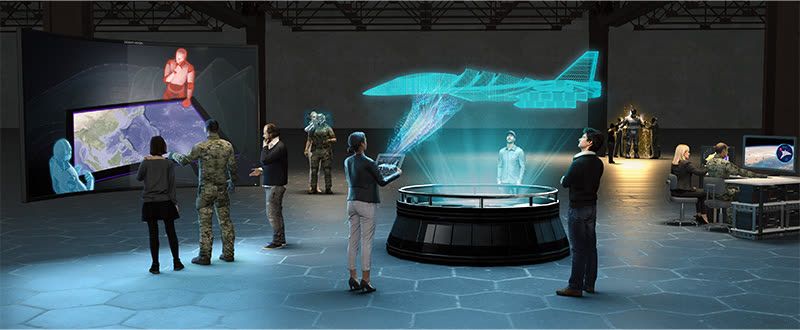
Efforts at the Edge — Building on its flagship capabilities, GenWar Lab is poised to evolve further with a program known as GenWar X, an experimental cell for developing advanced concepts that cut across existing tools and creating new tools in support of the Lab’s AI vision. Designers infuse games with alternative future scenarios and create adversary personas to model how conflicts might play out based on their decisions.
Improving Autonomy and Discovery

While generative AI enhances how humans think through challenges, agentic AI advances how intelligent systems act within those situations. This next phase of AI development focuses on autonomy — systems that can perceive, reason, and plan in dynamic, real-world contexts. APL researchers are attacking challenges in perception, reasoning, and planning to coordinate teams of diverse robotic platforms, enable autonomous agents to interpret and respond to their surroundings, and extend AI into the lab to fuel scientific experimentation and discovery.

In addition to robust internal and sponsored research, APL has collaborated with a variety of industries to accelerate cutting-edge research and development for the nation. In 2025, APL teamed with Microsoft to demonstrate an agentic AI planner for coordinating heterogeneous robotic teams. The project addresses the tough task of integrating highly specialized individual ground, aerial, and maritime platforms into one cohesive team.

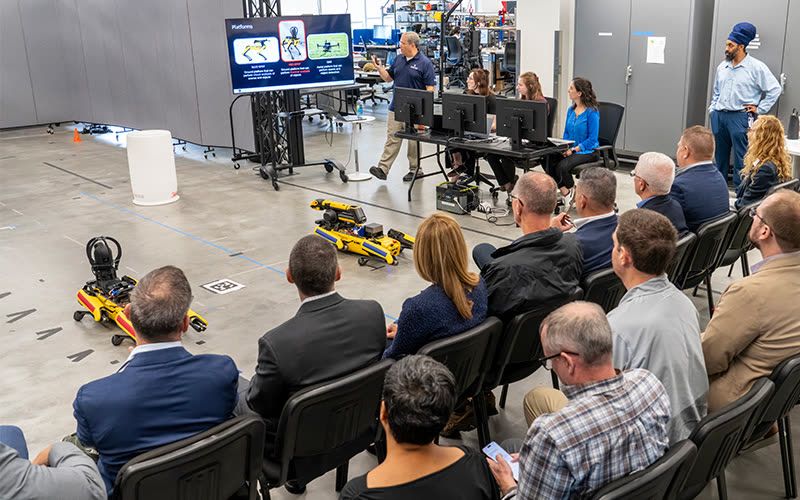
Microsoft and APL teams observe a September demonstration of collaborative robotics enabled by an agentic AI planner that uses large language models to coordinate diverse robotic platforms, showcasing how autonomy expertise and scalable cloud technologies can help move AI from concept to operational use.

The project’s AI agent — called MAESTRO (Microsoft and APL’s Ecosystem for Strategic Teaming in Robotics Operations) — interprets and scales human instructions and translates them into coordinated actions. During a September demonstration, David Patrone, a senior intelligent systems leader at APL, issued increasingly complex natural-language commands. Tasks ranged from simply “move forward” to multistep objectives such as “search this area and find a cold bag,” requiring MAESTRO to select the right sensor-equipped robot, plan a route, and validate the result.

APL has since integrated aerial and ground platforms to showcase greater operational range. This effort could enhance missions spanning disaster response to logistics to defense — or any scenario where operators need robots to work together with minimal human intervention.

APL is also looking to solve another difficult autonomy challenge: helping autonomous agents navigate unstructured environments and plan like humans.

Fresh out of the box, today’s robots require extensive training and human guidance — usually with a controller — to complete simple tasks. Under a project known as Full Scene Extraction, however, APL researchers are developing robotic agents that use perception and reasoning models to process complex environments and execute plain-language commands at the same time. By combining advances in large and visual language models, the researchers aim to help autonomous systems not only see and understand their surroundings, but also adapt dynamically and make informed decisions in real time. In situations where a robot once needed several weeks in a simulated environment to learn and complete a task, it can now accomplish that task on its first try.

“The Full Scene Extraction framework directs a robot to reason, on its own, through every step of a task,” said Rohita Mocharla, an APL computer vision engineer. “Where we once had to program each step for a robot to be successful, agentic AI allows the robot itself to plan out these steps.”

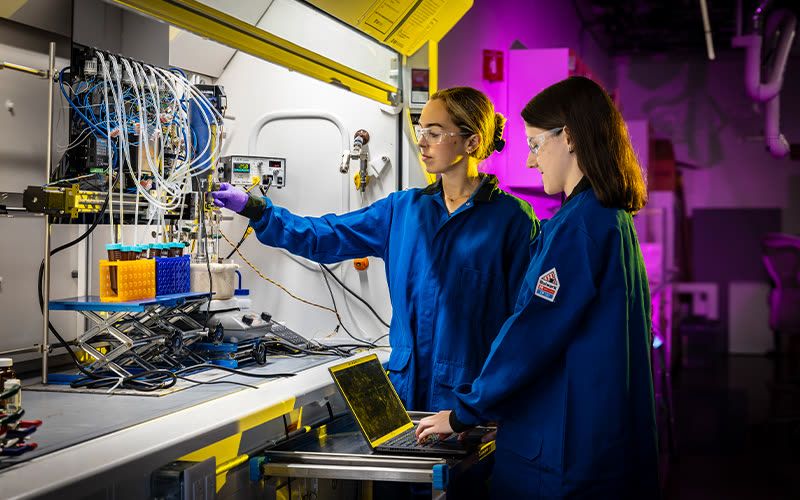
Allison Moyer (left) and Jenelle Millison (right) colead ATLAS, an AI-driven platform that dramatically reduces experiment time through automation and continual learning. The platform supports research on microcapsules — tiny particles engineered to release active substances over time — by accelerating process optimization through closed-loop testing, learning, and synthesis.

Beyond enabling autonomy in the field, agentic AI is driving innovation in the lab. APL’s researchers are leveraging the same principles — automated decision-making, iterative learning, and goal-oriented behavior — to transform how scientific experiments are conducted.

APL created an AI-driven research pipeline that dramatically accelerates experimental process optimization through continual learning. Designed to test, learn, and optimize in a closed loop, the system supports research on microcapsules — tiny particles containing an active substance inside a shell coating that controls its release over time. Given the acronym ATLAS, short for AI-driven, Testing, Learning, and Accelerated Synthesis, the platform has decreased manual experiment time by more than 80% and shows promise for expediting process optimization across a wide range of synthesis problems.

“Using AI as a coinvestigator allows researchers to attend meetings, brainstorm with others, and multitask while their experiment is running,” said Allison Moyer, a materials research chemist and ATLAS team lead.

In August, the team demonstrated how ATLAS can run calculations, search literature, generate a procedure, and execute an experiment, producing an almost on-target microcapsule and decreasing manual experiment time from 9 hours to less than 90 minutes.

Exploring Quantum Approaches for Sensing and Computing

As national security missions grow in complexity, quantum technologies are demonstrating the potential to deliver mission-critical capabilities. Quantum computing promises to solve optimization and modeling problems that exceed classical limits, while quantum sensing offers unprecedented precision for detecting and characterizing physical phenomena. APL is advancing both — developing the theoretical, algorithmic, and hardware insights needed to translate abstract quantum science into real operational advantage.

Through the Quantum Benchmarking Initiative (QBI) program, the Laboratory is working with the Defense Advanced Research Projects Agency (DARPA) to identify and assess unconventional approaches to building practical quantum computers. DARPA tapped APL at the start of the QBI program to leverage APL’s deep systems engineering expertise and distinguished quantum information team — qualities that uniquely position APL to create frameworks for evaluating quantum computing platforms. This effort enables DARPA to establish engineering benchmarks for what a utility-scale quantum computer should deliver — not just in theory, but in operational ways that matter for specific applications.

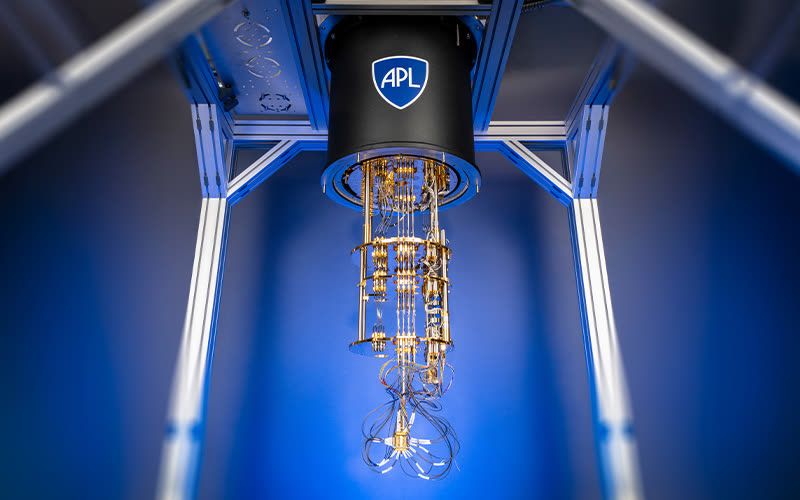
Cryogenic instrumentation supports quantum research by enabling experiments at extremely low temperatures, conditions often required for quantum computing and sensing approaches.

This year, APL also demonstrated how a so-called quantum “random walk” algorithm could accelerate semantic text analysis, enabling analysts to identify emerging narratives in large volumes of open-source information faster than classical computing methods allow.

APL teams also applied their expertise in modeling and simulation to study the potential value of quantum magnetometers to the Navy. These devices can detect minute changes in magnetic fields, providing valuable information for naval operators. The study results ruled out certain applications while identifying others that help address maritime challenges.

Accelerating Discovery Through Advanced Materials and Manufacturing

APL researchers are reimagining the development and production of advanced materials to strengthen national security and industrial resilience by combining AI, robotics, and novel fabrication methods to accelerate the design and optimization of high-performance materials.

One class of materials under development at APL could reshape how cooling and thermal management are achieved across defense, industrial, and consumer refrigeration systems. Unlike traditional refrigeration, which relies on compressors and circulating chemical refrigerants, semiconductor thermo­electric — or heat pumping — systems move heat using electrical current, enabling compact, solid-state designs with no moving parts. This is a critical advantage in mission environments where space, durability, and energy efficiency are at a premium.

In a study published in Nature Communications, a team of APL researchers and refrigeration engineers from Samsung Research demonstrated how particular high-performance nano-engineered thermoelectric materials invented at APL — known as controlled hierarchically engineered superlattice structures (CHESS) — nearly doubled heat-pumping performance at the material level and delivered up to 70% greater performance than currently available bulk thermoelectric devices in a fully integrated refrigeration system.

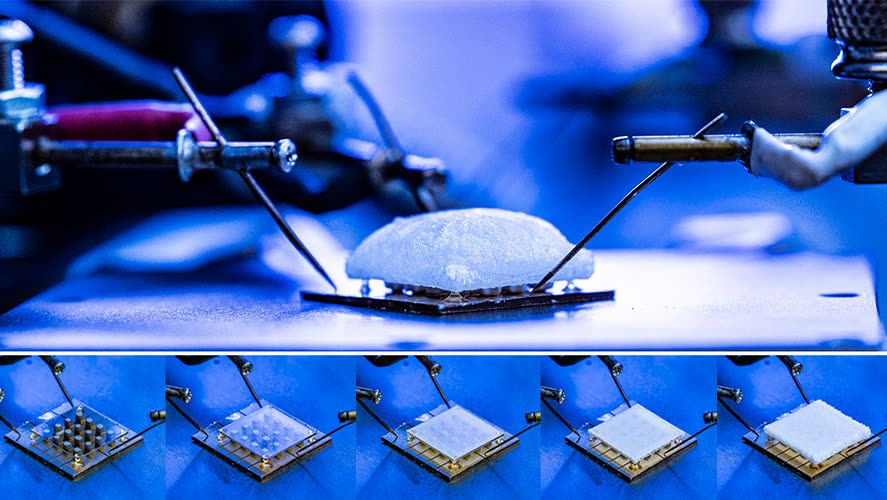
A close-up of testing and ice buildup on a CHESS-based thermoelectric device. The testing is used to evaluate how efficiently the materials convert electricity into cooling, supporting future solid-state refrigeration and energy-harvesting technologies.

Beyond improving efficiency, the CHESS thin-film technology requires extremely small amounts of active material, addressing potential supply chain constraints, in order to meet the cooling needs of household and industrial refrigeration. The CHESS refrigeration module was created was created by using standard microelectronic semiconductor tools, making it well suited for cost-effective, large-scale adoption.

In recognition of its transformative potential, this technology was honored with a 2025 R&D 100 Award, underscoring its promise to enable next-generation thermal management of both defense and commercial applications.

Separately, APL’s Transforming Evaluation and Testing via Robotics and Acceleration (TETRA) project reimagines how mission-critical metallic materials are developed for the defense industrial base. By integrating robotics, additive and advanced manufacturing, automated testing, and AI-guided analysis, the effort is a first-of-its-kind tool that enables researchers to explore hundreds of alloy compositions and processing variants simultaneously, rather than one at a time.

“When developing materials for defense needs, it’s not just about the composition of the alloy or system — it’s also about how you shape, treat, and refine it,” said Morgan Trexler, who leads the Research Program Area in APL’s Research and Exploratory Development Mission Area. “Because we can now explore hundreds of material and process combinations in parallel, TETRA compresses months of materials discovery into days — and gives us entirely new ways to diagnose problems in legacy systems. It’s not just a step forward, it’s a leap.”

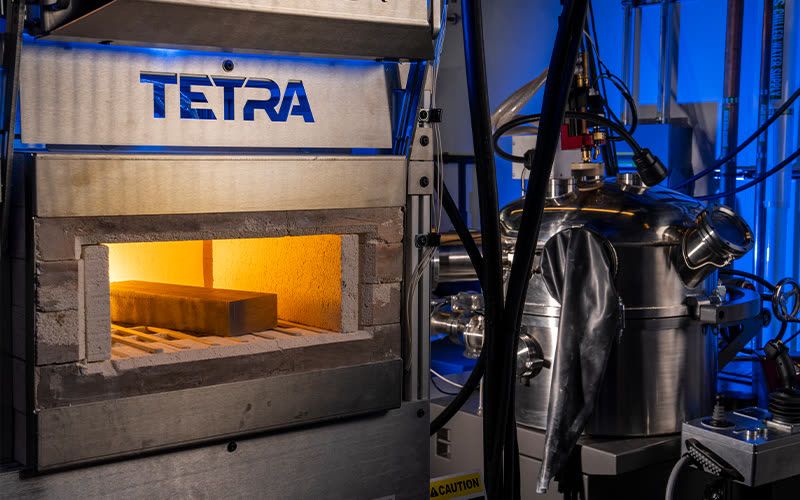
APL’s TETRA program uses blown-powder directed energy deposition to print dense metallic structures and rapidly generate many alloy variants for accelerated testing and evaluation.

TETRA leverages several advanced manufacturing techniques, including an additive manufacturing process called blown-powder directed energy deposition, a method where a laser melts metal powder as it’s fed into the build area, enables forming of dense structures layer by layer. The technique allows researchers to vary chemical compositions within each sample, enabling hundreds of alloy specimens to be printed on a single plate and prepared for automated testing. In addition to fabrication via additive manufacturing, the lab will feature a state-of-the-art melting furnace for ultrafast synthesis of custom castings from raw material, custom heat treatment furnaces and hot forging equipment for shaping material and modifying its microstructure, and robotic mechanical property measurement.

APL is also teaming up with the Johns Hopkins Whiting School of Engineering to improve how high-performance titanium parts are made using additive manufacturing. By using AI to expand the range of successful manufacturing conditions, the team is speeding up production and making parts that are stronger and more durable. The research was published in Additive Manufacturing in January, and could result in faster, more reliable manufacturing for mission-critical systems.

Building on the Laboratory’s extensive experience developing materials for extreme environments, another team discovered a way to apply a specialized coating to intricate internal surfaces. APL researchers adapted a Pulse Combustion Engine (PCE) system that was originally developed by ThermoChem Recovery International to survive extreme heat and acidic conditions. In this effort, the team is using a compact plasma spray torch to coat the interior of the engine with a coating of nickel-chromium-aluminum-yttrium. The protective coating endured over 13 hours of continuous operation, demonstrating its potential to significantly extend the operational life of components that are routinely exposed to extreme heat and acidic conditions.

Leveraging Biomanufacturing to Sustain and Protect

APL researchers are applying biological principles to develop sustainable solutions that meet critical mission needs in remote and resource-limited environments. By engineering biological systems to produce essential materials and medicines on demand, these efforts aim to reduce the burden on the supply chain and strengthen operational resilience.

By examining different feedstocks and growth conditions, APL scientists are developing methods that could enable on-demand food production for military and humanitarian missions alike — enhancing sustainability and resilience for operations in austere environments where access to fresh provisions is limited and logistics are complex.

Under the DARPA-funded Feedstocks for Food Production effort, which supports the Cornucopia program, the Laboratory is accelerating biomanufacturing to quickly produce safe and reliable sources of nutrition in areas where resources are scarce. The team is studying how algae and other microbes can convert nonpotable water — including pond and gray wastewater — into edible microbial biomass.

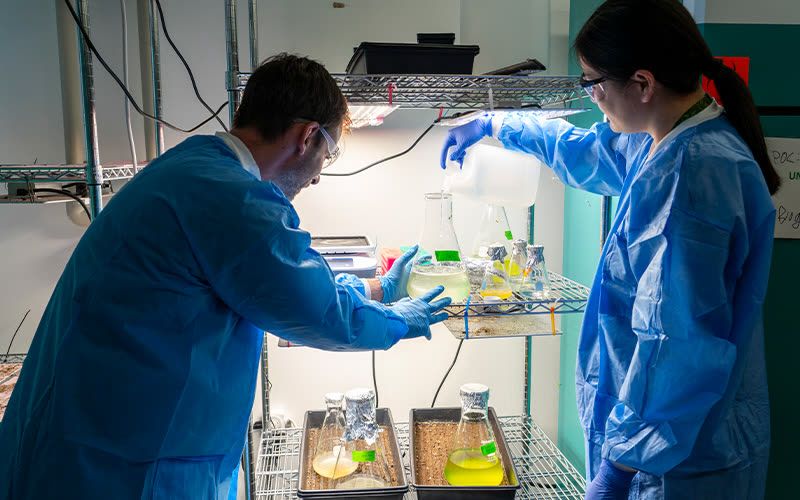
APL staff members John Sittmann and Leah Talbott work on Feedstocks for Food Production, exploring how algae and other microbes can convert nonpotable water into edible microbial biomass for austere environments.

“Think about how long it takes to grow grain to produce wheat,” said Collin Timm, chief scientist for APL’s Physical and Life Systems Branch. “It takes time to plant the material, let it grow, harvest it, process it, and then make it into something consumable. But what if we had a way to make food quickly and with whatever water is available? That’s the type of technology we’re progressing toward.”

Another APL team is tackling a serious national security vulnerability — the United States’ dependence on foreign sources for essential pharmaceuticals. A 2023 Department of War report found that nearly 75% of nearly 13,000 small-molecule drugs have their key ingredient manufactured internationally, while 27% rely on supply chains tied to China or have unknown origins. Disruptions in or denial of access to these pipelines could threaten the nation’s ability to produce life-saving medicines when they are needed most.

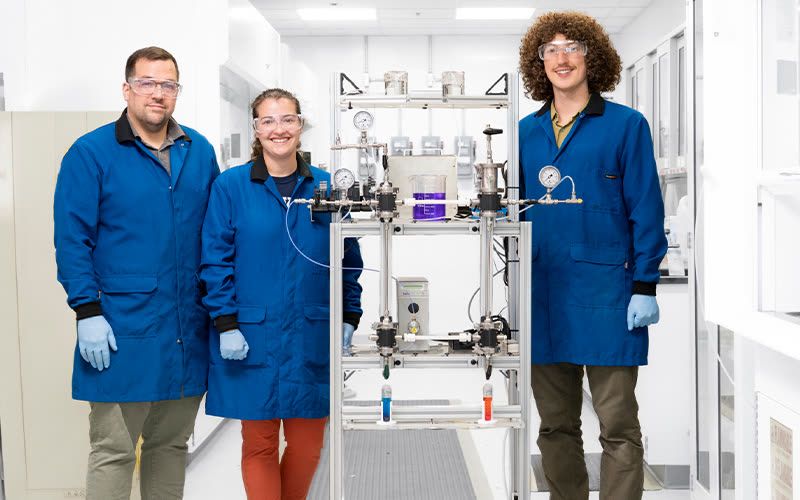
(From left) James Johnson, Mallory Solazzo, and Micah Nissly stand with a continuous pharmaceutical manufacturing device developed through a strategic internal investment that focused on maturing promising concepts into prototype-ready, high-impact capabilities.

APL researchers designed and built a system that could transform how active pharmaceutical ingredients are refined and manufactured within the United States. The system streamlines the complex process of separating drug compounds from mixtures — a step normally slowed by batch-type chromatography, which involves flowing chemical solutions through gel- or resin-filled columns. When combined with emerging biotechnologies that enable bacteria to produce pharmaceuticals — and further refined to prevent cross-contamination between molecule-binding solvents — APL’s approach could eliminate this bottleneck and help onshore critical drug manufacturing.

In a separate effort to also reduce dependence on external supply chains, APL funded a small research team to quickly test whether red-blood-cell-like products could be made without relying on donated blood. The team explored the feasibility of producing erythrocyte-like cells that can be freeze-dried and stored long term. This work could have major implications for trauma care in remote or resource-limited settings — especially for warfighters — by enabling safe blood transfusions anytime, anywhere, and with minimal logistical support.

In 2025, APL researchers demonstrated that induced pluripotent stem cells can be reliably grown and directed to become reticulocytes, a precursor of red blood cells. This means functional lab-made red blood cells could be produced from a renewable source without relying on donors. They also developed new preservation methods that could lead to freeze-dried, shelf-stable blood, overcoming the current 42-day storage limit, and designed a prototype bioreactor to demonstrate how the process could be scaled up. The Lab will continue to work with the Office of Naval Research to fabricate, test, and characterize the bioreactor.

Gaining Insight Into Warfighter Health and Injury

Providers are required to assess warfighter health and deployability at every medical encounter, yet they often lack the critical information needed to accurately evaluate health history and service- and location-specific operational requirements. APL is working with the Department of War to modernize how medical determinations are made by developing a data infrastructure and analytics platform, known as PARATUS, that uses AI and advanced algorithms to enable medical providers to make more accurate, consistent determinations of whether a military member is employable, deployable, and fit for duty or requires medical intervention. By combining quantitative health indicators, advanced analytics, and human performance data, the project aims to identify risks earlier, improve deployment and return-to-duty decisions, and support a unified standard for joint readiness across the armed forces.

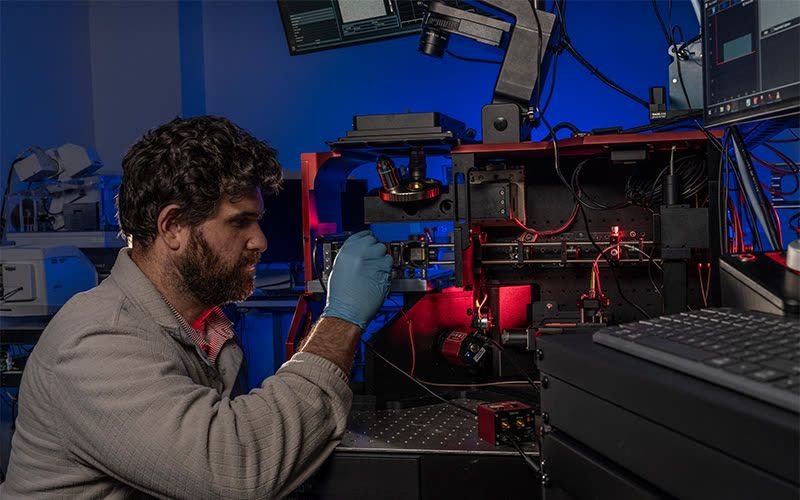
Eyal Bar-Kochba, principal investigator of POSITRONIC, uses digital holographic microscopy to noninvasively monitor cellular injury and study how brain cells respond to stress and potential treatment.

Beyond readiness evaluations, APL researchers are advancing scientific understanding of traumatic brain injury, one of the most complex and persistent health challenges faced by service members. To better study blast-induced brain damage, the Laboratory developed a research platform, known as POSITRONIC — short for Platform to Optimally Study Injury and TRauma On Neural Integrity and Circuiting, that uses brain organoids to model cellular responses in real time. Paired with noninvasive imaging, the system enables researchers to observe how brain cells behave under stress and to test potential treatments or protective technologies in a controlled, ethical, and reproducible environment.

“Our goal is to develop a prototype platform to better understand the effects of mild blast-induced traumatic brain injury caused by repeated low-level blasts,” said Eyal Bar-Kochba, principal investigator on the project. “In doing so, we hope this research will help pave the way for advancements in preventative measures and improved diagnosis and treatment options.”

By bridging clinical assessment with cutting-edge biomedical research, the Laboratory is helping the military gain a more complete picture of warfighter health — one that not only improves accuracy and consistency in medical decisions but also drives new strategies for protection, recovery, and long-term resilience.