

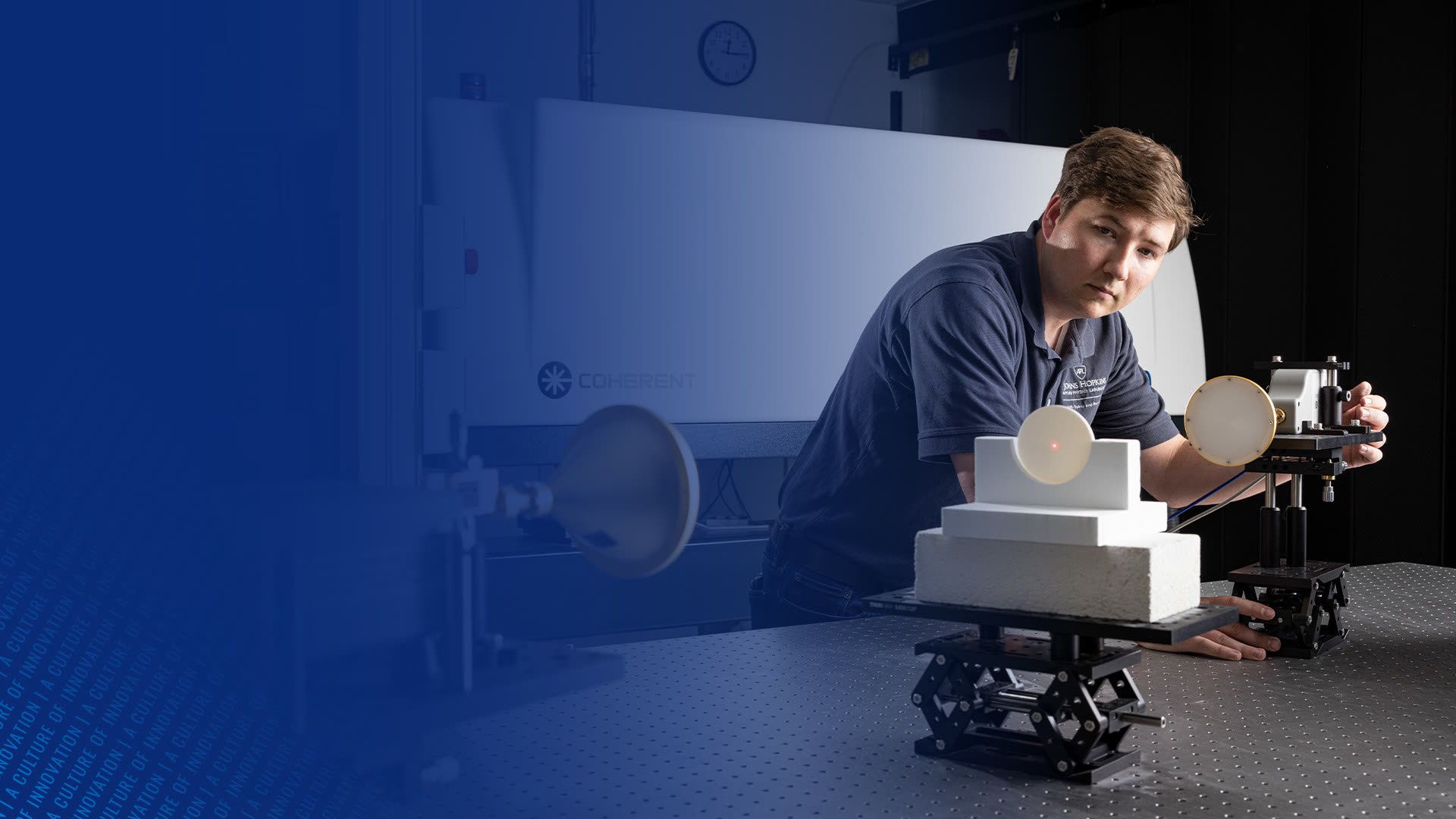
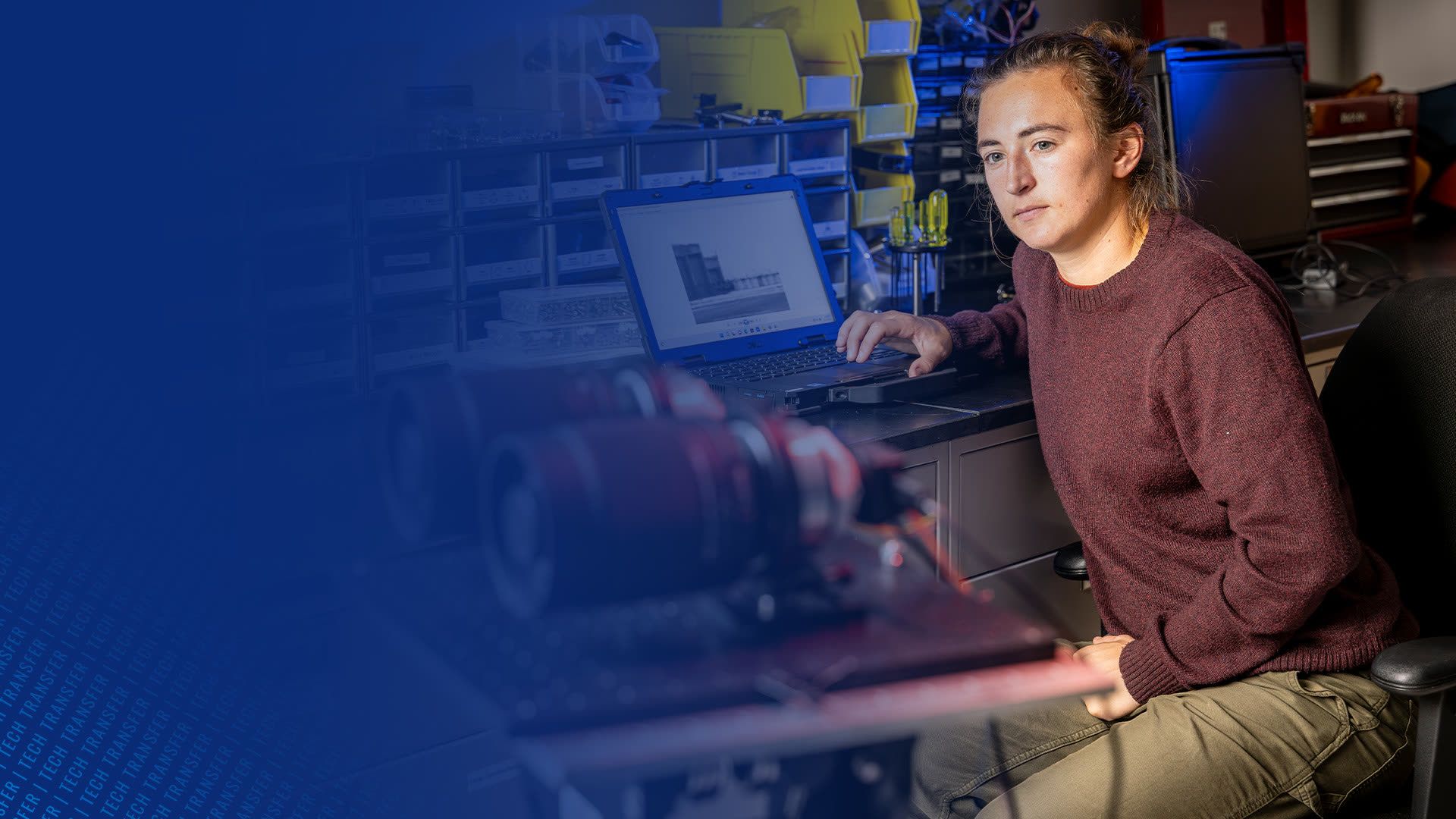

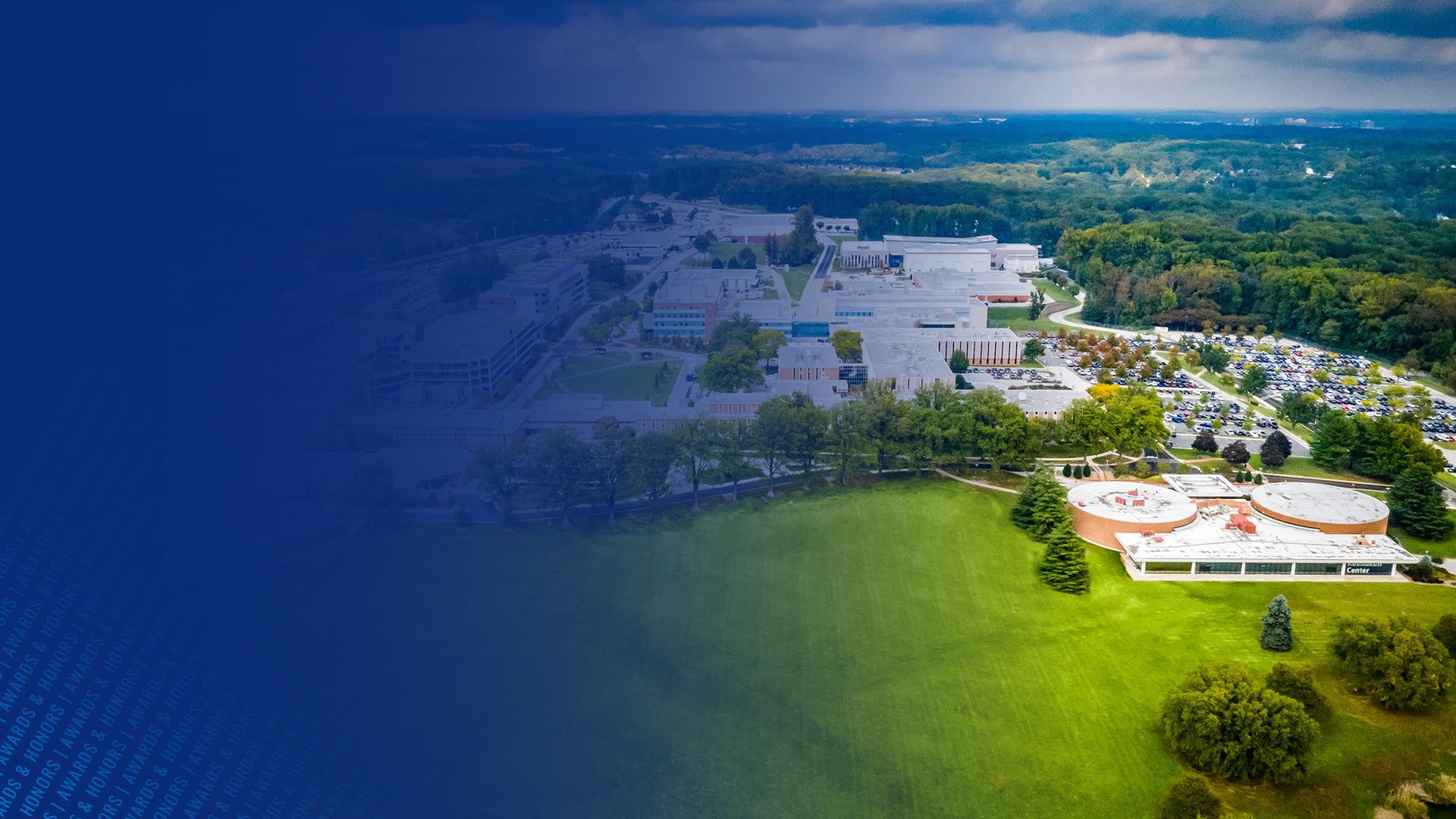
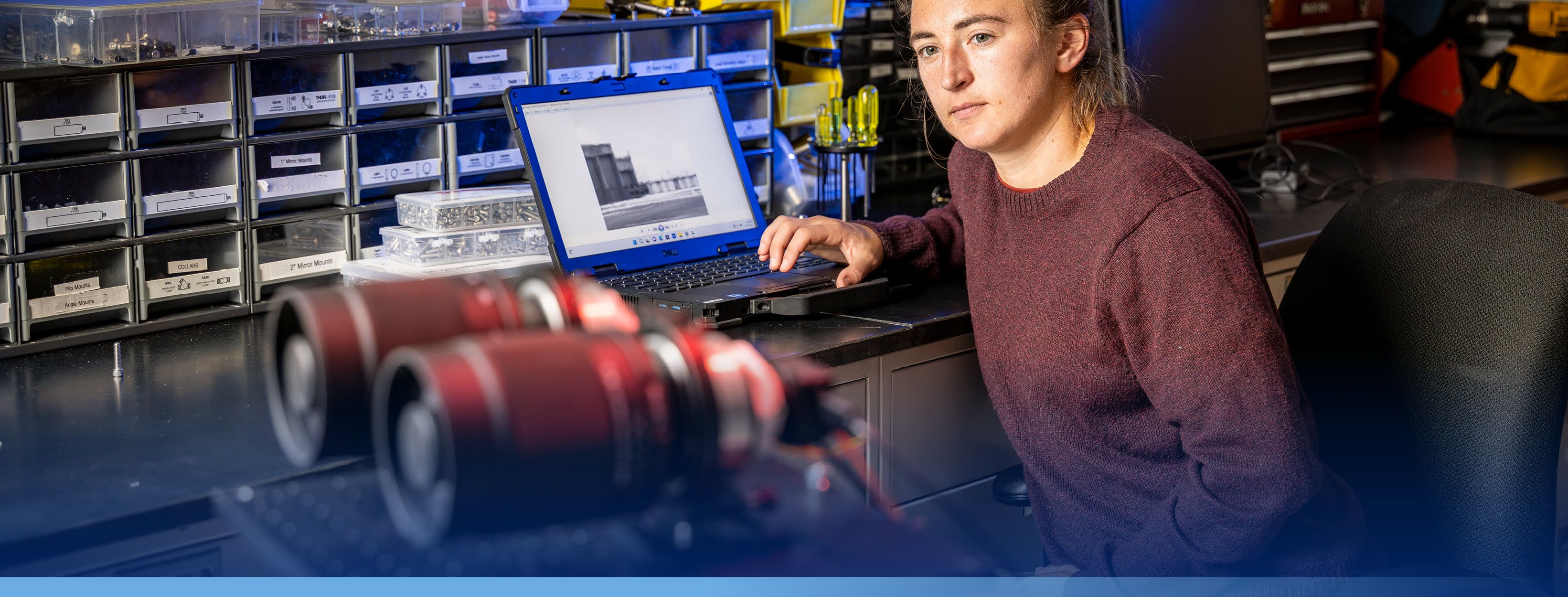
With a large portfolio of cutting-edge intellectual property and a team of experienced licensing staff, APL’s Tech Transfer offers streamlined access to technological innovations made at the Laboratory.
Intellectual Property and Patents
Since Tech Transfer was established in 1999, APL has logged more than 8,700 IP disclosures and executed over 1,100 license and other like agreements.
In FY 2025:
IP disclosures received
U.S. patents issued
Licenses and agreements
Commercialized products
The Innovation Life Cycle: Research to Application
Tech Transfer drives game-changing impact by responsibly transferring knowledge and technology, partnering strategically, and discovering external advances that complement APL’s mission. Here are three projects that showcase Tech Transfer’s collaboration with innovators and programs through three pathways: transfer, partner, and discover.
Transfer. With strategic investment from Tech Transfer, senior APL chemist Kelly Van Houten and her team created a proof of concept for a color-changing test strip to signal the presence of any fentanyl analog instantly. Tech Transfer then licensed the technology to a U.S. company that is now evaluating the strip’s commercial viability.
Partner. Over the past 25 years, APL’s Frontier Radio has been used on space missions exploring regions from the Sun to Mars and beyond, including NASA’s Europa Clipper and Parker Solar Probe missions. Tech Transfer facilitated a commercial license and five-year master service agreement with Rocket Lab in 2020. Today, Rocket Lab builds the electronics for the technology, while the Lab supports software updates. This collaboration has reduced system costs and delivery timelines by a factor of 10, accelerating the path from the Lab to orbit from three years to less than six months.
Discover. Through a strategic collaboration with Microsoft, APL researchers are advancing the application of artificial intelligence (AI) across multiple domains. One effort applies AI and scene-mapping technologies to transform robots from requiring many commands into autonomous teammates capable of planning, coordinating, and executing missions in disaster response and battlefield environments leveraging Microsoft’s Azure platform. In addition, APL is leveraging its expertise in closed-loop discovery of novel superconductors to collaboratively investigate whether Microsoft’s MatterGen generative AI tool can predict, make, and measure novel oxide superconducting materials. This capability could be further evolved to create designer materials to meet specific performance needs, reduce reliance on rare earth elements, or provide alternatives to critical materials that are vulnerable to supply chain disruptions.
2025 APL Start-Ups: Accelerating Commercial Pathways
Nuquantic is advancing environmental monitoring technologies through a partnership with Early Charm, an incubator of start-up companies based in Baltimore, Maryland. Nuquantic licensed APL’s portable environmental DNA (eDNA) filtration system and, with APL Tech Transfer’s support, secured a $300,000 Maryland Innovation Initiative award from the Maryland Technology Development Corporation (TEDCO) to accelerate commercialization.
BIOPAC Medical Systems LP is working a novel neural blockade monitoring device to improve real-time assessment of regional anesthetic effectiveness. The company stems from a licensing partnership between APL, Johns Hopkins Medicine, BLOCKsynop, Inc., and BIOPAC Systems and builds on APL-originated neural block monitoring technology developed by former APL engineer Wayne Sternberger. To accelerate commercialization and clinical translation, the venture has support from the Maryland Innovation Initiative and with a National Science Foundation Small Business Innovation Research grant.
Deep Root Biolabs is commercializing a patent-pending platform that integrates plant and microbial systems for sustainable agriculture by strengthening soil health and increasing crop resilience, environmental remediation, and critical mineral recovery. Founded by former APL researcher John Sittmann, the company translates fundamental biological processes into practical, scalable solutions.
Program Spotlight: Archimedes Award
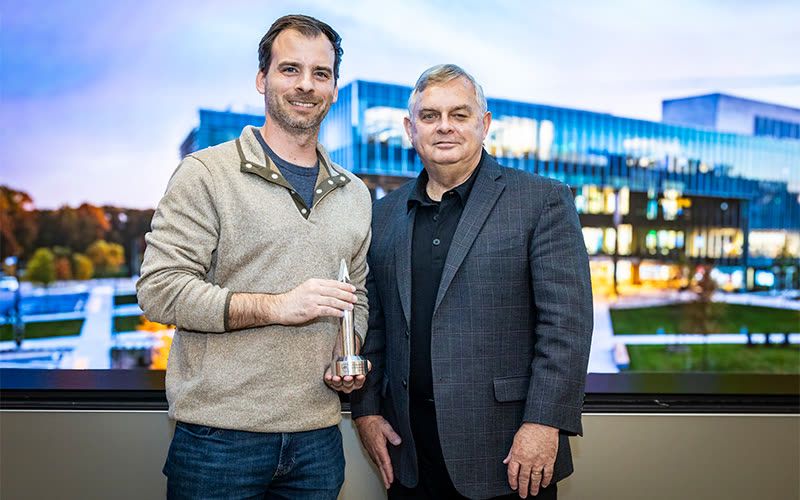
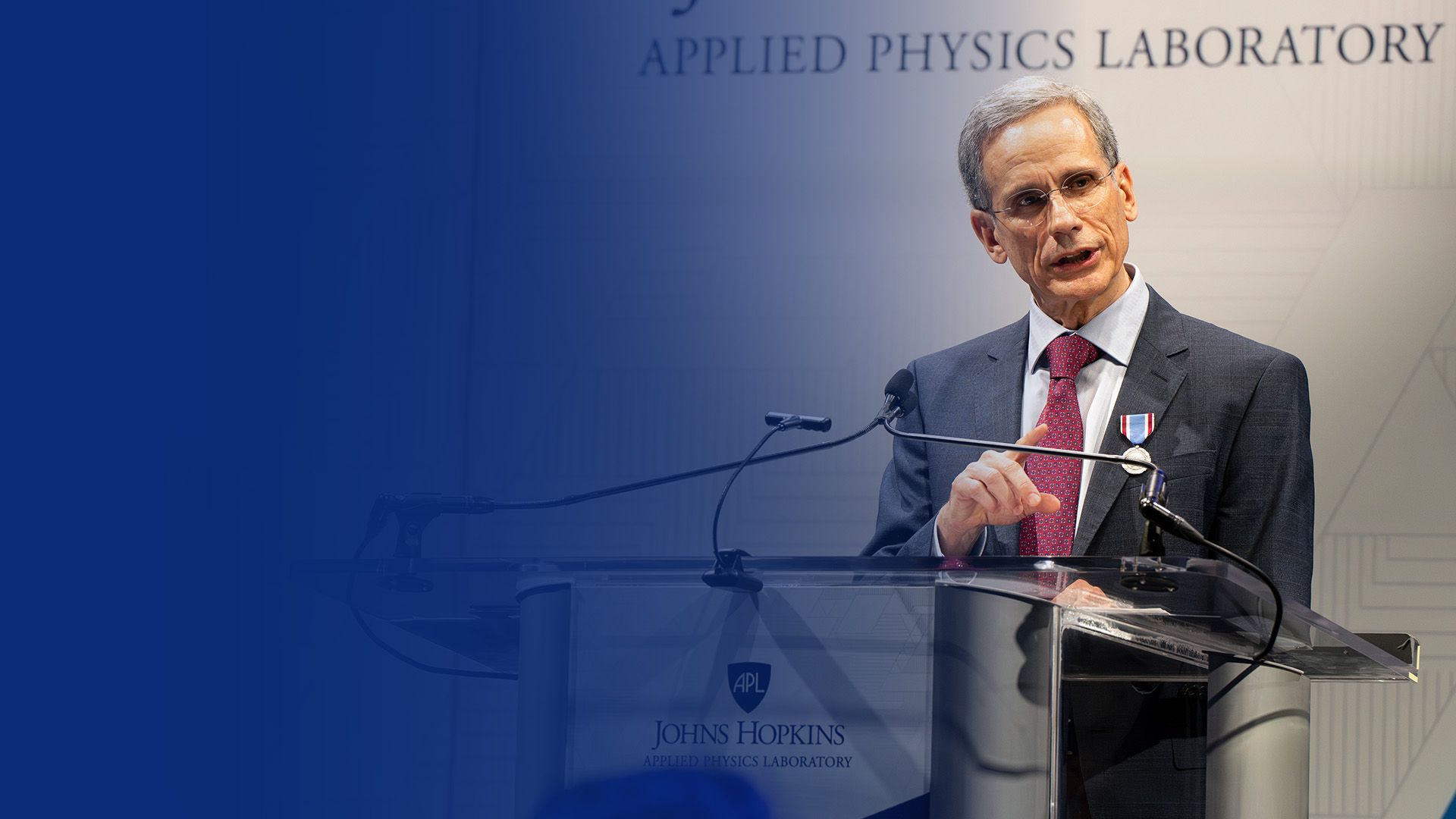
John Sittmann, founder of Deep Root Biolabs, and APL Director David M. Van Wie. Sittmann is the third Archimedes Award recipient and was presented with the award in October 2025.
Launched in 2019 by APL’s Tech Transfer, the Archimedes Award promotes entrepreneurship and accelerates the commercialization of Laboratory technology. Each year, up to two recipients are selected to receive two years of office and lab space at Johns Hopkins Technology Ventures’ FastForward innovation hubs, along with a package of medical and other benefits for the same time period. The recipient in 2025 was John Sittmann.